Portland Airport Terminal
All the information featured on this page was compiled and written by David Enrich, a renowned expert in aviation and airport guides since 1999.
Portland International Airport (PDX) is the main air gateway to Oregon and one of the most praised mid‑size airports in the USA, known for its local character, efficient layout, and comfortable atmosphere. Its terminal complex has evolved over decades from a modest field into a modern H‑shaped building now being extensively renovated and expanded.
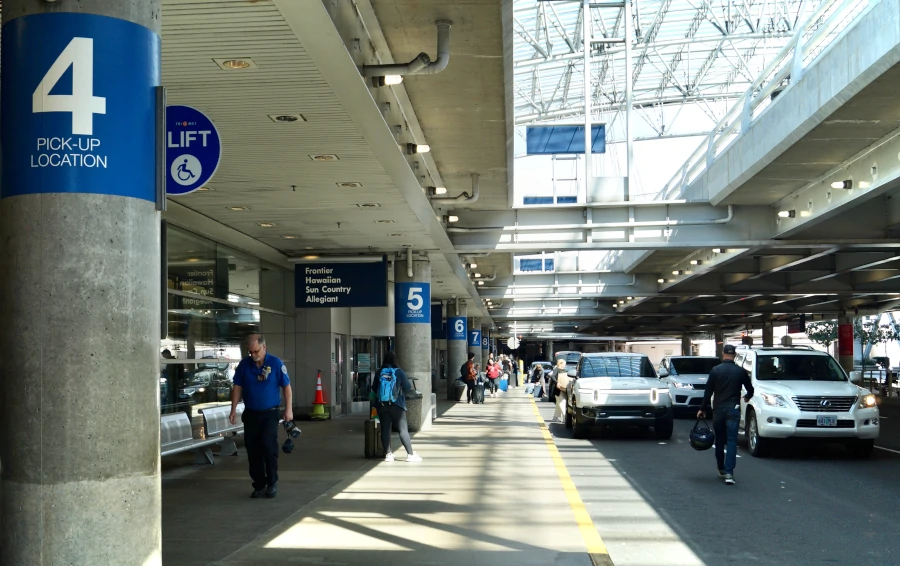
History and terminal origins
The current airport site along the Columbia River was purchased in 1936, replacing the earlier Swan Island Airport that had become too small for modern aircraft. A “super airport” called Portland–Columbia Airport opened in 1940, and in the 1950s a new terminal and long parallel runways were built; the airport was then renamed Portland International Airport and gained its PDX code. The core 1959 terminal remains the basis of today’s building, which has undergone major expansions in the 1970s, 1980s, 1990s, and a new main‑terminal redevelopment whose first phase opened in 2024 with a striking timber roof and larger central hall.
Terminal layout: zones and levels
PDX uses a single main terminal with an H‑shaped concourse layout, making wayfinding relatively simple compared with multi‑terminal hubs. The landside area includes the main ticketing hall, security screening, baggage claim on a lower level, and access to ground transportation; airside, concourses are arranged predominantly for domestic flights but can also handle international services.
Because the building is compact, walking times between most gates are usually under 10–15 minutes, so tight connections are more forgiving than at larger hubs.
Shops, restaurants, and lounges
The terminal is well known for emphasizing local Portland and Oregon brands in its concessions program, including bookstores, craft‑focused gift shops, regional apparel, and specialty food and beverage outlets. Dining ranges from coffee roasters and fast‑casual concepts to sit‑down restaurants and brewpubs, many offering “street‑price” menus similar to what you would find in the city. For frequent travelers, PDX offers airline lounges (such as Delta Sky Club and Alaska Lounge) along with a common‑use or independent lounge option depending on the current operator and airline partnerships.
If you have a long layover, choosing a gate area near the larger restaurants and lounge cluster gives you better access to power outlets and quieter seating.
Facilities and practical services
The airport provides free Wi‑Fi throughout the terminal, with generally reliable speeds suitable for streaming and remote work. ATMs and currency‑exchange points are available in both landside and airside areas, and luggage trolleys are widely distributed; however, traditional left‑luggage/locker services may be limited or unavailable due to security regulations, so storing bags is often handled via nearby third‑party services or hotel arrangements when needed.
Download digital boarding passes and any needed entertainment before arriving, as public Wi‑Fi can slow down during peak times.
Families and reduced‑mobility services
For families, PDX offers family restrooms, changing tables, designated nursing or lactation spaces, and children‑friendly seating zones near some gates. Travelers with reduced mobility (PRM) can request wheelchair assistance via their airline and benefit from elevators, ramps, accessible restrooms, and reserved disabled parking spaces connected to the terminal by elevators or walkways.
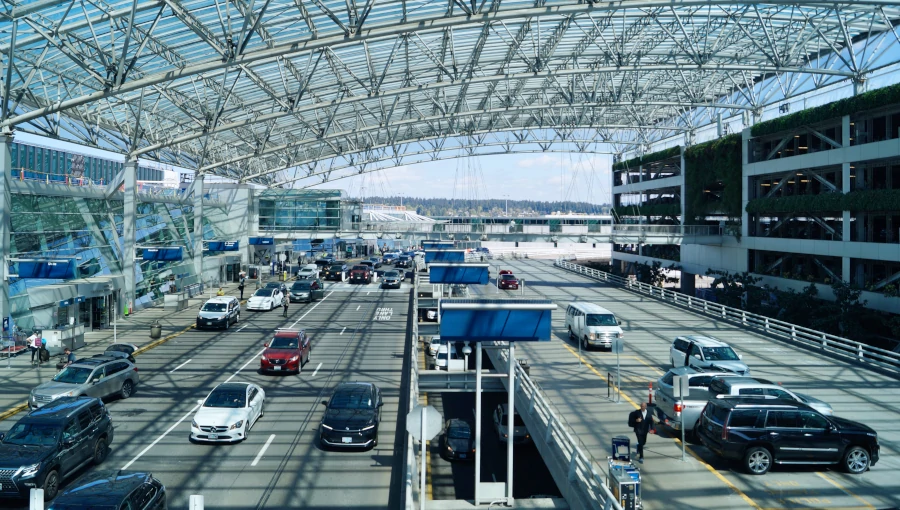
Security, baggage screening, and lost property
Security screening is centralized at the main terminal checkpoints, following standard TSA procedures with separate lanes for PreCheck and, during busy hours, for premium passengers, which helps smooth the flow. Checked baggage is screened behind the scenes and delivered to a consolidated baggage-claim hall, where carousels are clearly signed by flight and airline; oversize or special items are usually delivered at a dedicated point nearby. Lost and found is handled jointly by the Port of Portland’s airport office and individual airlines, with the airport office generally responsible for items lost in public areas and the airlines for items left on board or at gates.
If you lose something, file an online claim with as much detail as possible within 24 hours—this greatly improves your chances of recovery.
Check‑in and boarding information
Check‑in counters for each airline are grouped in the main hall, with self‑service kiosks widely available for printing boarding passes and luggage tags. Many passengers now check in online and use bag‑drop counters only, which can significantly shorten waiting times, especially in the early‑morning departure wave. Boarding usually follows standard group or zone procedures at each gate, with clear digital displays; for international flights you should arrive at the gate earlier to allow for additional document checks. A good rule of thumb is to be at the airport at least 2 hours before domestic departures and 3 hours before international ones, as recommended by most airlines serving PDX.
Example of popular routes
These routes illustrate how PDX connects the Pacific Northwest with major West Coast hubs, the Rocky Mountain region, and at least one key transatlantic destination, giving travelers a blend of short‑haul and long‑haul options from a single, efficiently designed terminal.
Distance inside the terminal
Distances in that terminal can be huge. Please, check walking times here:
Walking times from security to gates:
Time to the farthest B gate: 1 to 2 minutes.
Time to the farthest C gate: 2 to 6 minutes.
Time to the farthest D gate: 2 to 6 minutes.
Time to the farthest E gate: 2 to 5